Five years with the same employer and a resignation letter on the table. That combination makes you eligible for gratuity under the Payment of Gratuity Act, 1972. But eligible does not mean automatic.
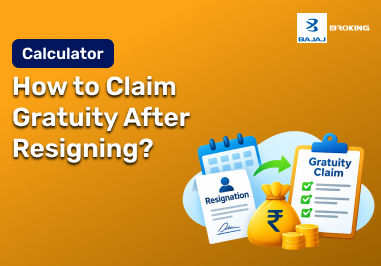
You start the process by filling Form I. That is the official claim form. Put in your name, joining date, last working date, and why you left. Hand it to your employer. Do this within 30 days of leaving.
From the day they receive Form I, your employer has 30 days to pay. If they take longer, they owe you interest on the delayed amount. That is not optional for them. It is what the law says.
If the employer refuses the claim or picks a fight over the amount, you go to the Controlling Authority in your area. That is usually the Labour Commissioner. You file Form N within 90 days of the problem arising. They hear both sides and tell the employer what to pay.
What Is Gratuity?
Gratuity is money your employer pays when you leave after long service. It comes as a one-time lump sum, not as part of your monthly salary.
The Payment of Gratuity Act (PoGA), 1972 governs this. Every factory, mine, plantation, port, railway, and organisation with ten or more employees falls under it.
What drives the amount? Two things: your last drawn Basic Salary plus Dearness Allowance (DA), and how many full years you worked. House Rent Allowance (HRA), bonus, and overtime play no role here.
Retirement, resignation after five years, death, and permanent disability all trigger the payment. Death and disability are exceptions where the five-year condition is dropped. Private sector employees have a ceiling of ₹20 lakh on the total amount receivable.
Rules to Claim Gratuity After Resignation
Resigning employees can claim gratuity. But a few rules come first.
Five continuous years with the same employer is the threshold. Moving to a new company before hitting that mark means starting the count from zero.
Beyond that basic rule:
Section 2A of the PoGA, 1972 says service broken by approved leave, medical grounds, lay-off, or lockout still qualifies as continuous. A genuine health break does not disqualify you.
The claim form should go in within 30 days of the gratuity becoming due. Missing that window does not kill the claim. A late submission cannot be rejected on timing alone.
Once the form reaches the employer, 15 days is all they get to specify the amount.
Payment must follow within 30 days of the employer receiving the application.
Eligibility Criteria for Claiming Gratuity After Resignation
Five years is the headline number. But there is more to eligibility than just that.
How continuous service is counted: Five uninterrupted years with one employer is the rule. Some courts have accepted 4 years and 240 working days as meeting the five-year mark in companies running a six-day week. This comes from Section 2A of the PoGA, 1972 but is not applied uniformly across all employers.
Employer size: The Act goes into effect when the business has ten or more employees at any time during the year. Some smaller setups pay voluntarily, but they don't have to.
Why the exit happened: Resignation is acceptable. However, firing someone for bad behaviour, violent behaviour, or intentionally damaging property does not. Section 4(6) of the PoGA, 1972 lets employers take away gratuity in those cases.
What salary counts: Only Basic Pay and DA go into the formula. HRA, overtime, incentives, and variable allowances stay out.
Fixed-term workers: Under the Code on Social Security, 2020, fixed-term employees qualify after just one completed year of service. Standard resignation rules still apply to them.
Quick summary of what qualifies:
Five continuous years with the same employer
Employer has ten or more employees
Exit is by resignation, not misconduct
Claim submitted using the correct form
How To Claim Gratuity After Resigning: Step By Step Process
Six steps. That is all it takes to move from resignation to receiving your gratuity.
Step 1: Confirm your service period
Pull out your appointment letter and last working day confirmation. Count the years carefully. The date of joining and the last day of work determine whether five years have been completed.
Step 2: Get Form I
Form I is the official gratuity application under the Payment of Gratuity (Central) Rules, 1972. HR will have it. The Labour Commissioner's office has it too if HR is unresponsive.
Step 3: Fill it correctly and submit
Name, address, department, joining date, resignation date, and last drawn salary all go in. Once filled, hand it directly to your employer or HR department. Keep a copy for yourself.
Step 4: Wait for employer acknowledgement
After receiving Form I, the employer has 15 days to send a notice back specifying the gratuity amount they have calculated.
Step 5: Receive the payment
30 days from the date the application was received is the payment deadline. Cross that and simple interest starts building on the unpaid amount.
Step 6: Dispute if needed
If the amount offered is less than the formula gives, or if the employer refuses outright, take the matter to the Controlling Authority, typically the Assistant Labour Commissioner in your area.
Documents Required to File a Gratuity Claim After Resignation
Get these together before submitting:
Filled Form I
Identity proof such as Aadhaar card or PAN card
Appointment or joining letter
Recent salary slips showing Basic Salary and DA clearly
Resignation acceptance letter or relieving letter
Bank account number and IFSC code for the transfer
Service certificate from the employer if one was issued
Any written communication from the employer about gratuity, if available
Time Limit for Claiming Gratuity After Resignation
Timing has two sides here: what the employee must do and what the employer is bound by.
Employee side: Submit the claim within 30 days of the last working day. That is the guideline. Miss it and the claim stays valid. The PoGA, 1972 does not allow rejection purely on the basis of a late submission. Filing months after resignation is still acceptable.
Employer side: Once Form I lands with the employer:
When payment is late: Simple interest kicks in automatically from the day payment was due. The employee does not need to separately demand it. It is built into the Act.
One more point worth knowing: gratuity is a legal right that stays claimable even if the claim comes in late. No employer can use a timing argument to close the door on a valid claim.
What Happens if Employer Delays or Refuses to Pay Gratuity?
Delaying or refusing gratuity is not just an HR problem. It carries legal consequences under the PoGA, 1972.
On delay: Simple interest starts accruing from the day payment was due. It continues until the amount is cleared. No separate court order is needed for this to apply.
On refusal or dispute: File a complaint with the Controlling Authority, which in most states is the Assistant Labour Commissioner. That office will examine the claim and direct the employer to pay if the claim holds. Still no action after that? The matter moves to the Appellate Authority.
Criminal liability: Section 9 of the PoGA, 1972 is very clear. If an employer doesn't give an employee a tip for a good reason, they could go to jail for up to two years, pay a fine, or both.
Additional protections that employees should know:
No court order can put a stay on gratuity payment.
Employer bankruptcy does not wipe out the gratuity obligation. It remains payable.
Creditors cannot attach gratuity to recover dues from the employer.