

Get Free Demat Account*









Open Your Free Demat Account
Enjoy low brokerage on delivery trades
By Dalal Street Investment Journal (DSIJ)
In February, India's CPI inflation rose to an 11-month high, with the US-Israel-Iran conflict leading to a spike in crude oil prices. With the RBI's upcoming MPC meeting on April 6–8, the key question is whether the RBI can afford to announce a rate cut. Here's a detailed analysis of what we might expect from the RBI's policy decision.
India’s Ministry of Statistics and Programme Implementation (MOSPI) flash data shows the total CPI (Consumer Price Index) edged up 3.2% in February '26, up from 2.7% in the prior month, slightly higher than the market's expectations of 3.1% and at an 11-month high. Apart from the base effect, the Feb’26 CPI was boosted by higher food inflation (CFPI) at 3.5% vs 2.1% in the prior month.
The 2-month moving average (2MA) of the CPI stood around 3.0% in February 2026, still below the RBI's target of +4.0%. The 2MA of the Core Food Price Index (CFPI) was around 2.8%. The sequential (MoM) CPI for February 2026 increased by +0.1%, compared to +0.3% in the previous month, under the newly revised CPI series with a base year of 2024=100.
In Feb’26, India’s headline CPI was boosted by:
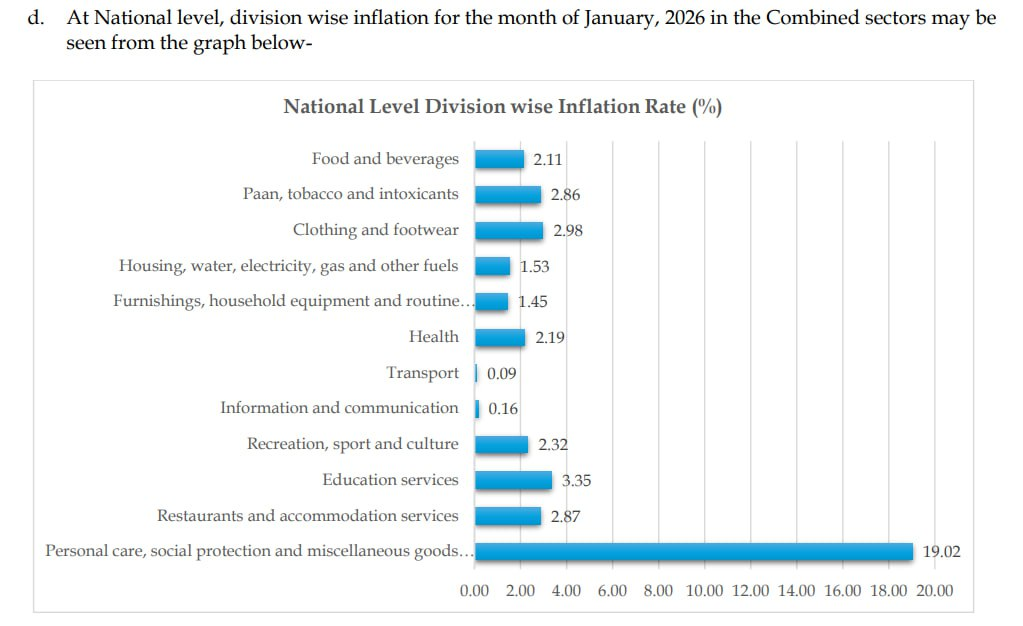
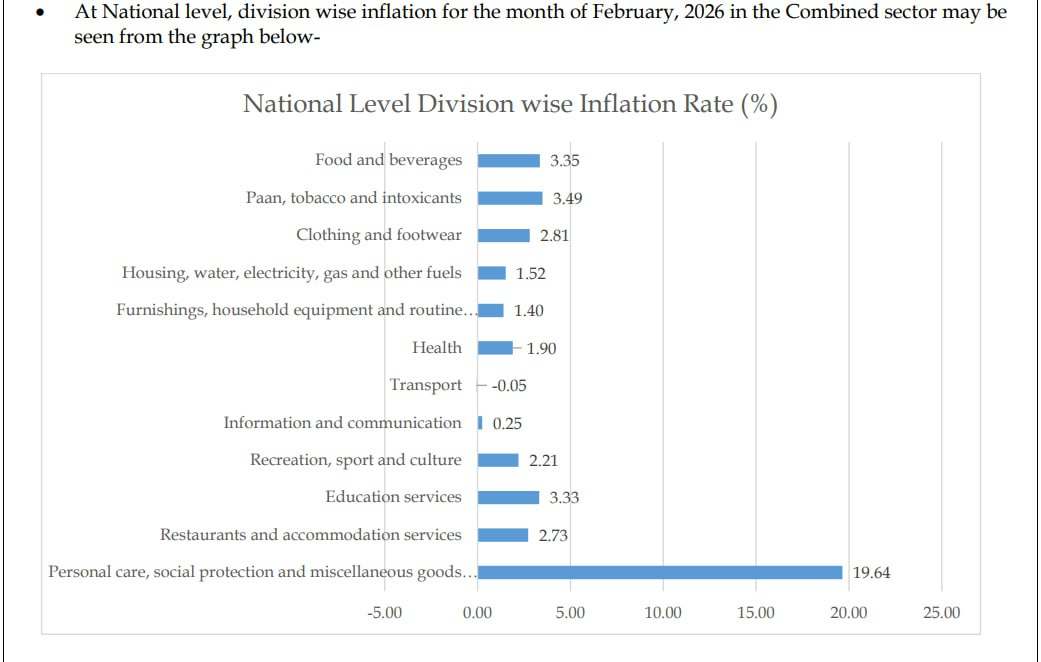
Food & beverage: 3.3% vs 2.1% (higher vegetable inflation)
Paan, tobacco & intoxicants: 3.5% vs 2.9% (higher excise duties)
Personal care, social protection and miscellaneous. goods: 19.6% vs 19.0% (led by precious metals)
In Feb’26, India’s headline CPI was dragged by:
Clothing & footwear: 2.8% vs 3.0%
Healthcare: -1.9% vs 2.2%
Transport: -0.05% vs 0.09%
Restaurants & accommodation: 2.7% vs 2.9%
Fading Favourable Base Effects: The sharp YoY uptick is partly due to the fading of favourable base effects from the significant price declines observed in early 2025.
Higher Food Inflation: CFPI jumped to 3.5% in February from 2.1% in January. High prices for specific vegetables like cauliflower and tomatoes were major drivers.
Precious Metals Surge: Persistent increases in gold and silver prices, driven by global geopolitical uncertainty, significantly impacted both the total & core CPI, with the Personal Care segment seeing inflation near 19.6% in Feb’26 vs 19.0% in Jan’26.
New CPI Series Sensitivity: February was the 2nd reading under a revised CPI series (Base Year 2024), which has an increased sensitivity to fuel and service costs, making the headline number more reactive to energy price volatilities.
In February 2026, India's core CPI (excluding food and fuel) was reported at +3.4%, unchanged from the previous month, implying a 2-month moving average (2MA) of 3.4%. Meanwhile, India's Super Core CPI (which excludes food, fuel/energy, and precious metals like gold and silver) was around 2.1% in February 2026, up slightly from 2.0% in January 2026, giving a 2MA of about 2.05%.
The RBI is now placing greater emphasis on Super Core Inflation, as it tends to be less distorted by the volatile movements in food, fuel, and precious metals, which can cause fluctuations in the headline inflation numbers. Super core inflation, currently at around 2.0%, remains well below the RBI's target of 4.0%, indicating weak pricing pressures, subdued core demand, and possibly muted discretionary consumer spending.
Given that Super Core Inflation is significantly below the target, this suggests that the RBI may need to adopt a more accommodative monetary policy to help push inflation toward the target. The real repo rate needs to remain higher than the headline CPI by around 1.0-1.5%, which would imply a repo rate between 4.50% and 4.00% in the coming months, down from the current level of 5.25%.
Thus, it is anticipated that the RBI may consider cutting rates by at least 50 bps in 2026 to stimulate demand and push inflation closer to the desired target.
Also, India’s nominal GDP in USD terms should grow at least 10.0-12.0% on a sustainable basis, with corresponding productivity growth, so that India becomes a developed economy by 2047-50, with a respectable size of around $15 trillion, comparable to the whole EU.
The gap between average headline (3.0%), core (3.4%), and super core (2.0%) inflation indicates that India’s accelerated retail CPI (headline inflation) over the last two months was primarily a supply-side issue rather than demand-driven.
A central bank like the RBI has only the policy tools (interest rates and liquidity) to adjust the demand side of the economy. In contrast, the supply side is influenced by proactive government policy. Also, India’s economic growth and employment situation may face some setbacks in the coming months, not only due to uncertainties over Trump's trade/tariff war but also due to Iran-related disruptions in LPG/fuel supplies and across commodities and other basic materials. Gig workers and certain other parts of the labour force may be heavily affected by the closure of hotels, restaurants, and many other industries due to supply chain disruptions owing to the Iran war and the closure of the Strait of Hormuz chokepoint.
Looking ahead, although headline inflation may surge further due to supply chain disruptions from the Iran war and a higher USDINR (higher imported inflation), the RBI may focus more on India’s muted super core inflation, which has been hovering around +2.0%. RBI may be in a pause (dovish hold) in April but may cut by 25 bps in June and Dec '26, for a cumulative 50 bps in 2026.
The RBI is expected to maintain a pause on policy rates in its upcoming meeting (scheduled for April 6-8, 2026) for the following reasons:
Neutral Stance: In its February 2026 meeting, the MPC unanimously held the repo rate at 5.25% and maintained a "Neutral" stance.
Benign Core Inflation: Excluding volatile food and fuel, core inflation remains stable at approximately 3.4%, indicating that underlying demand pressures are contained.
Focus on External Risks: The RBI is closely monitoring potential "imported inflation" from rising global crude oil prices and a stronger USDINR amid escalating tensions in the Middle East and the Iran war.
Despite the expected surge in headline inflation, India’s super core inflation (w/o food, fuel, and precious metals), the present focal point of the RBI MPC, remains subdued at around 2%, much below the RBI’s unofficial target of 4.0%. Although RBI officially targets total/headline CPI, not core or super core inflation, it’s now increasingly focusing on core/super core inflation (w/o food, fuel/energy and precious metals like gold & silver) ─ in line with all major global banks.
Thus, in April, the RBI may change its stance from the present ‘neutral’ to ‘accommodative’ due to growing Middle East disruptions, which can negatively affect India’s real GDP growth while pushing even super core inflation. Even if India’s super core inflation will surge to +3.0% in the coming months, it will still be significantly lower than the +4.0% RBI targets (unofficial). In that scenario, the real rate at 1.50-1.00% above super core CPI (accommodative stance) implies 4.50-4.00% RBI repo rates, compared with the present 5.25%. Thus, there may be a policy space of at least a 50 bps rate cut in CY26 or FY27.
As a central bank, the RBI will ensure not only price stability but also employment, growth, and financial stability by providing adequate, targeted, and timely monetary stimulus, supporting the government’s potential fiscal stimulus.
Disclaimer :
Investments in securities market are subject to market risk, read all related documents carefully before investing. This content is for educational purposes only. Securities quoted are exemplary and not recommendatory.
The information on this website is provided on "AS IS" basis. Bajaj Broking (BFSL) does not warrant the accuracy of the information given herein, either expressly or impliedly, for any particular purpose and expressly disclaims any warranties of merchantability or suitability for any particular purpose. While BFSL strives to ensure accuracy, it does not guarantee the completeness, reliability, or timeliness of the information. Users are advised to independently verify details and stay updated with any changes.
The information provided on this website is for general informational purposes only and is subject to change without prior notice. BFSL shall not be responsible for any consequences arising from reliance on the information provided herein and shall not be held responsible for all or any actions that may subsequently result in any loss, damage and/or liability. Interest rates, fees, and charges etc., are revised from time to time, for the latest details please refer to our Pricing page.
Neither the information, nor any opinion contained in this website constitutes a solicitation or offer by BFSL or its affiliates to buy or sell any securities, futures, options or other financial instruments or provide any investment advice or service.
BFSL is acting as distributor for non-broking products/ services such as IPO, Mutual Fund, Insurance, PMS, and NPS. These are not Exchange Traded Products. For more details on risk factors, terms and conditions please read the sales brochure carefully before investing.
Content Partner - Dalal Street Investment Journal Wealth Advisory Private Limited
This article is for educational purposes only and should not be considered investment advice. Market investments are subject to risks. DSIJ Wealth Advisory Private Limited is a SEBI-registered Research Analyst (Reg. No: INH000006396) and Investment Adviser (Reg. No: INA000001142). Please consult your financial adviser before investing.
For more disclaimer, check here : https://www.bajajbroking.in/disclaimer
Level up your stock market experience: Scan the QR to download the Bajaj Broking App for effortless investing and trading

Enjoy low brokerage on delivery trades
|
Open Your Free Demat Account
Enjoy low brokerage on delivery trades
|


